Water is an important part of many industrial processes. However, not every process can use ordinary water. Some industries need water with very low levels of dissolved minerals to avoid problems with equipment, production processes, or product quality.
This is where a DM Water Plant manufacturer can be useful. DM stands for Demineralization, and the process is designed to reduce dissolved ionic substances from water.
For businesses that are new to industrial water treatment, understanding how a DM Water Plant works and where it is used can make it easier to select the right system.
What Is a DM Water Plant?
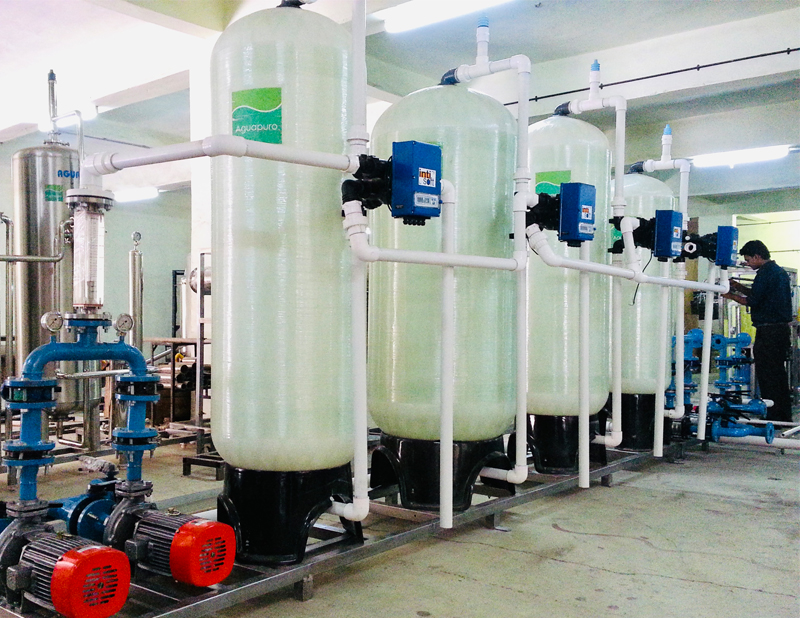
A DM Water Plant is a water treatment system used to remove dissolved mineral ions from water.
The process generally uses ion-exchange resins. These resins exchange unwanted positively and negatively charged ions with hydrogen and hydroxyl ions. The hydrogen and hydroxyl ions combine to form water.
The result is demineralized water with a much lower concentration of dissolved ionic substances.
The exact quality of DM water depends on the system design, raw-water quality, resin selection, and operating conditions.
Why Do Industries Need DM Water?
Different industrial processes have different water-quality requirements.
Minerals present in untreated water can contribute to scaling, deposits, corrosion, or other problems in certain applications.
DM water may be required for applications such as:
- Boiler feed water
- Pharmaceutical manufacturing
- Chemical industries
- Laboratories
- Textile processing
- Electronics-related processes
- Battery manufacturing
- Process water
- Specialized industrial applications
The required water quality depends on the particular process and equipment.
How Does a DM Water Plant Work?
Although the configuration can vary, a typical demineralization system may involve the following stages.
1. Raw Water Inlet
The process starts with raw water entering the treatment system.
Before demineralization, the water may require pre-treatment depending on its quality.
2. Pre-Treatment
Pre-treatment helps protect the ion-exchange units and improve overall system performance.
Depending on the raw-water analysis, pre-treatment may include:
- Multimedia filtration
- Activated carbon filtration
- Water softening
- Cartridge filtration
- Iron removal
- Other suitable treatment processes
Not every plant requires all of these stages.
3. Cation Exchange
The water passes through a cation exchange vessel containing suitable resin.
The resin exchanges positively charged ions such as calcium, magnesium, and sodium with hydrogen ions.
4. Anion Exchange
The water then passes through an anion exchange vessel.
Negatively charged ions such as chloride, sulphate, and bicarbonate can be removed through the ion-exchange process.
5. Final Water Treatment
Depending on the required water quality, additional polishing or treatment may be provided.
The final system configuration should be selected according to the required conductivity, TDS, silica, and other relevant water-quality parameters.
What Is Ion Exchange?
Ion exchange is the main principle behind conventional DM water treatment.
In simple terms, ion-exchange resin contains sites that can exchange certain ions in water with other ions held by the resin.
A DM system normally uses different resins for positively and negatively charged ions.
Once the resin becomes exhausted, it needs to be regenerated so that it can be used again.
What Is Resin Regeneration?
During normal operation, ion-exchange resin gradually loses its ability to remove ions.
Regeneration restores the resin’s treatment capacity.
Cation and anion resins use different regeneration chemicals and procedures. The regeneration process must be carried out according to the system design and chemical-handling requirements.
Proper regeneration is important for maintaining the desired treated-water quality.
Benefits of a DM Water Plant
A properly designed DM Water Plant can offer several advantages for industrial applications.
Low-Mineral Water
The process reduces many dissolved ionic substances from water.
Supports Industrial Processes
DM water can be used where low mineral content is important for production or equipment operation.
Helps Control Scaling
Reducing certain dissolved minerals can help minimize scale-related problems in suitable applications.
Suitable for Different Industries
DM systems can be designed for a wide range of industrial requirements.
Can Work With Other Treatment Systems
In some applications, DM treatment can be combined with technologies such as RO, filtration, or other polishing systems.
DM Water Plant vs. RO Plant
RO and DM plants are both used for water purification, but they work differently.
An RO Plant uses a semi-permeable membrane and pressure to reduce dissolved salts and other impurities.
A DM Water Plant generally uses ion-exchange resins to remove dissolved ionic substances.
In some industrial applications, both technologies may be used together.
For example:
Raw Water → Pre-Treatment → RO → DM/Polishing → Final Water
The correct arrangement depends on raw-water quality, required water quality, capacity, and the industrial application.
What Should You Consider Before Installing a DM Water Plant?
Choosing a DM plant should start with understanding your actual water-treatment requirements.
1. Test the Raw Water
Water analysis is one of the most important steps before system design.
Testing may include parameters such as:
- TDS
- Conductivity
- pH
- Hardness
- Alkalinity
- Chloride
- Sulphate
- Silica
- Iron
- Other relevant parameters
2. Define the Required Water Quality
Determine what quality of demineralized water your process requires.
Some applications may focus on conductivity, while others may have additional requirements.
3. Determine Plant Capacity
Calculate how much DM water is needed per hour and per day.
Also consider operating hours, peak demand, storage capacity, and possible future expansion.
4. Select Suitable Resin
The resin should be selected according to the water quality and treatment objectives.
Ask the manufacturer about the resin type, expected operating life, and regeneration requirements.
5. Understand Chemical Requirements
Regeneration requires chemicals, so businesses should understand the quantity, storage, handling, and safety requirements before installing the system.
6. Consider Maintenance
Regular monitoring and maintenance are necessary for reliable operation.
Ask about service requirements, resin replacement, valve maintenance, and availability of spare parts.
Common DM Water Plant Problems
A DM plant may experience performance issues if it is incorrectly designed or poorly maintained.
Some common problems include:
- High conductivity in treated water
- Resin exhaustion
- Poor regeneration
- Resin fouling
- Incorrect flow rates
- Channeling inside vessels
- Valve problems
- Chemical handling issues
- Lack of regular monitoring
Monitoring treated-water quality can help identify problems early.
How to Maintain a DM Water Plant
Regular maintenance can help maintain consistent performance.
Some useful practices include:
- Monitor treated-water conductivity
- Check the condition of ion-exchange resin
- Follow the correct regeneration procedure
- Inspect valves and pipelines
- Check flow and pressure
- Maintain chemical systems properly
- Look for leakage
- Keep records of water-quality readings
- Service equipment according to the manufacturer’s recommendations
The exact maintenance schedule depends on the plant design and operating conditions.
How to Choose a DM Water Plant Manufacturer?
Selecting the right manufacturer is an important step when planning a DM water treatment system.
Consider the following:
Technical knowledge: Choose a manufacturer that understands your industrial application and water-quality requirements.
Water analysis: The manufacturer should consider actual raw-water test results before recommending the system.
Customized design: The plant should be designed according to your required capacity and water quality.
Quality components: Check the specifications of vessels, resins, valves, piping, instruments, and other equipment.
Installation support: Ask whether installation, commissioning, and operator training are provided.
After-sales service: Check the availability of spare parts and technical support.
DM Water Plant Manufacturer in India
Businesses looking for a DM Water Plant Manufacturer in India should compare manufacturers based on technical capabilities rather than only the initial price.
Important factors include system design, raw-water analysis, resin selection, plant capacity, regeneration requirements, equipment quality, installation, and long-term support.
A manufacturer with experience in industrial water treatment can help businesses understand which treatment stages are appropriate for their particular application.
Why Consider Spring Ion Exchange?
Spring Ion Exchange provides water and wastewater treatment solutions for industrial and commercial applications.
Its water-treatment solutions include DM water systems along with other treatment technologies. The appropriate system can be planned according to factors such as raw-water quality, required capacity, application, and treated-water specifications.
For businesses planning a DM Water Plant, discussing the raw-water analysis and process requirements with a technical team can help in selecting a suitable treatment configuration.
Final Thoughts
A DM Water Plant can be a useful solution for industries that require water with low levels of dissolved minerals. The system uses ion-exchange technology to remove many dissolved ionic substances from water.
However, the right DM system depends on several factors, including raw-water quality, required water quality, plant capacity, resin selection, regeneration requirements, and the specific industrial application.
Before choosing a DM Water Plant Manufacturer in India, businesses should test their water, clearly define their treatment requirements, compare technical specifications, and understand the long-term maintenance needs.
A properly planned system can help industries maintain the water quality required for their processes while supporting more consistent water treatment operations.