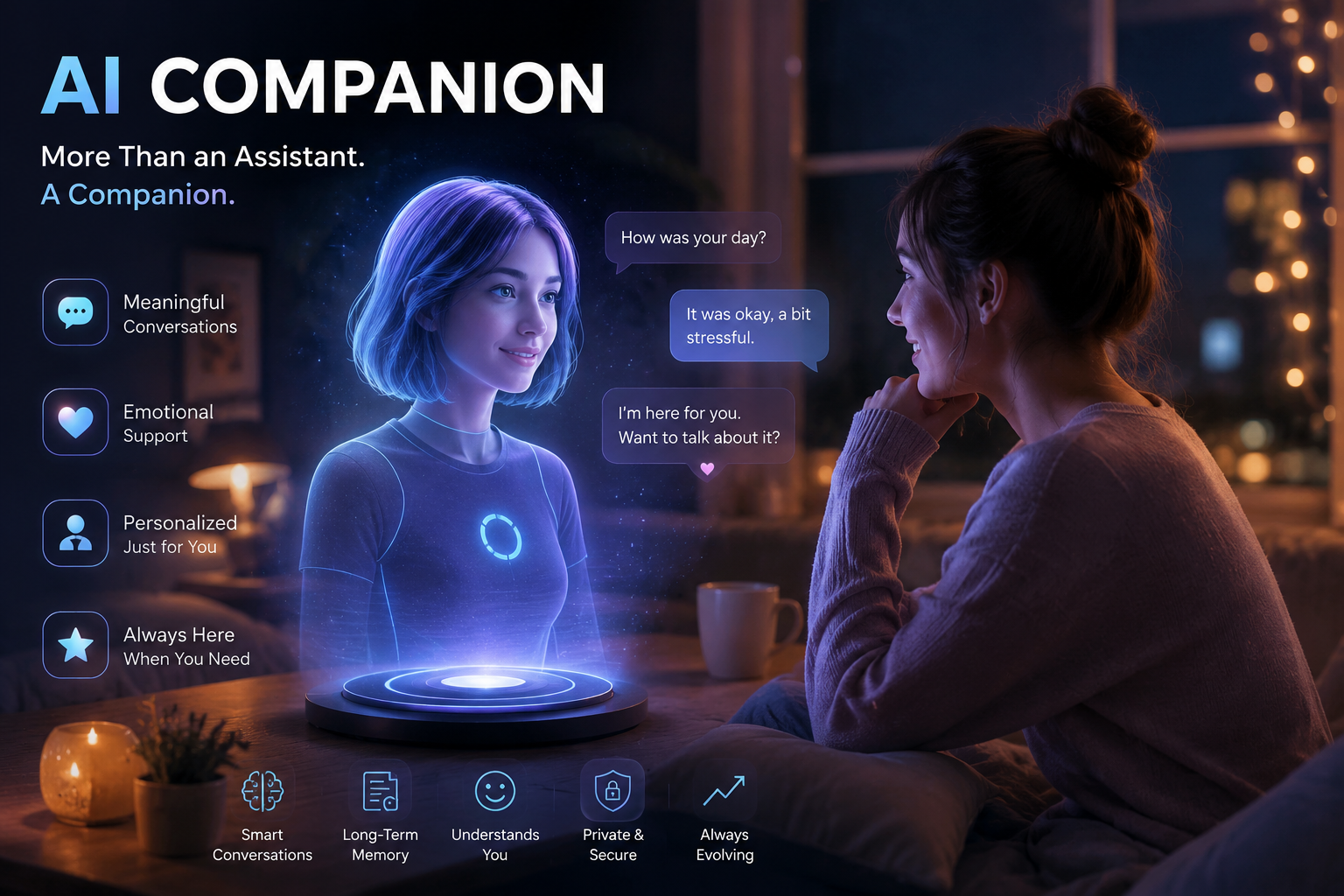
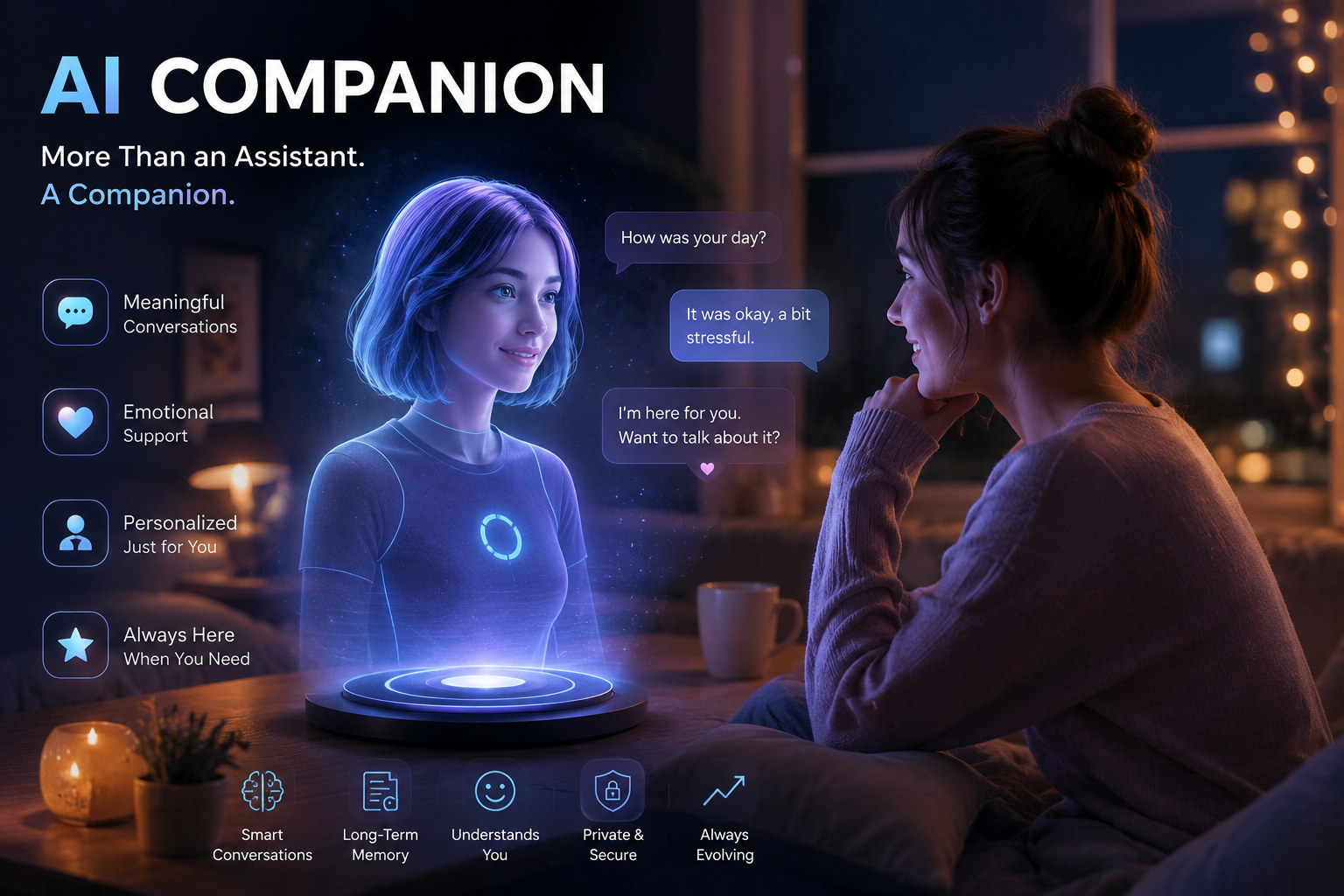
Artificial intelligence is moving into a more personal area of digital life. What started mainly as a way to answer questions, generate content, or automate routine work is now becoming a source of conversation, entertainment, emotional interaction, and companionship.
AI companion platforms are gaining attention across North America, Europe, Asia-Pacific, and other emerging technology markets. The growth is not limited to one type of user or one style of application. People are using conversational characters for casual conversations, storytelling, roleplay, emotional expression, entertainment, and everyday social interaction.
Why Personal Conversations Are Driving Adoption
The biggest shift in AI companionship comes from personalization. Traditional software generally responds to commands, while companion applications are designed to maintain a continuing conversational relationship.
For many people, an AI girlfriend experience is appealing because conversations can feel more personalized than ordinary chatbot interactions. The character may remember preferences, respond according to a selected personality, maintain conversational context, and develop a recognizable communication style over time.
This creates a different kind of user experience. Instead of opening an application only when a specific task needs to be completed, users may return because the interaction itself becomes the reason for opening the application.
Global Demand Is Creating a Larger Market
The numbers surrounding AI companion applications suggest that the category has moved beyond an experimental phase.
Appfigures identified 337 active, revenue-generating AI companion apps worldwide in 2025, with 128 launched during the first half of that year. The same analysis estimated that the category could generate more than $120 million in mobile revenue during 2025.
Another market analysis published in 2026 estimated the global AI companion market at approximately $36.9 billion in 2025, with a projection of $257.7 billion by 2032. Market estimates can differ considerably depending on what researchers classify as an AI companion, so these figures should be viewed as directional rather than identical measurements of the same market.
Personalization Is Becoming the Main Product Advantage
AI companion users generally expect more than quick answers. They want continuity.
A character that forgets everything after every conversation can quickly feel generic. A character that remembers previous discussions, preferences, interests, communication patterns, and important conversational details can feel considerably more consistent.
This is where memory architecture becomes important.
Modern companion applications can divide memory into several layers. Short-term memory can retain the current conversation, while longer-term memory can store selected preferences and recurring information. Developers can also introduce rules that decide what should or should not be remembered.
This approach improves both usability and privacy.
For example, a user may want a companion to remember their favorite music or preferred conversation style but may not want every private message stored permanently. Giving users control over memory can therefore become an important product feature rather than an afterthought.
The same principle applies to personality. A companion should maintain recognizable traits without becoming repetitive. Developers need a balance between consistency and variation so that conversations feel natural rather than scripted.
Voice and Visual Interaction Are Changing User Expectations
Text remains central to AI companionship, but voice and visual interaction are becoming increasingly important.
Voice creates a stronger sense of presence because users can communicate without typing. Natural speech patterns, pauses, emotional tone, and conversational timing can make an interaction feel more immediate.
Visual systems add another layer. AI-generated avatars can change clothing, settings, expressions, and scenes according to a conversation. This opens opportunities for storytelling, gaming, entertainment, and character-driven applications.
Regional Markets Are Developing Their Own Preferences
AI companion adoption does not look exactly the same everywhere.
North American users have shown strong interest in conversational entertainment, character interaction, and personalized AI experiences. Europe has a growing audience as well, although privacy, transparency, and consumer protection remain important considerations.
Asia-Pacific presents another major opportunity. The region has a strong history of character-based entertainment, mobile-first applications, virtual influencers, gaming communities, and digital social experiences. These cultural patterns can make AI character products particularly relevant.
Monetization Is Moving Beyond Simple Subscriptions
The growing user base has created several monetization opportunities.
Subscriptions remain one of the most common models. Premium users may receive higher message limits, advanced memory, voice conversations, better models, additional characters, or enhanced visual capabilities.
Credit-based systems can work for resource-intensive functions. Image generation, voice calls, and other compute-heavy features may use credits while basic conversations remain available without payment.
Character marketplaces can provide another revenue opportunity. Users could create or customize characters and pay for premium personalities, story packs, visual assets, or specialized conversational experiences.
Trust Will Matter as Much as Engagement
High engagement can be valuable, but engagement alone should not define product success.
AI companions operate in a particularly sensitive environment because conversations can become personal. Users may share private experiences, emotional concerns, relationship problems, or other information they would not normally publish publicly.
Privacy therefore needs to be built into the product architecture.
Clear data policies, secure storage, appropriate access controls, transparent memory settings, and responsible handling of personal information can help establish trust.
The issue becomes even more important when applications serve younger audiences. Age controls, content moderation, reporting mechanisms, and parental safeguards may be necessary depending on the product and target market.
AI Romantic Chat Is Becoming Part of a Wider Digital Experience
The market is also moving toward broader forms of social interaction rather than keeping companionship limited to one type of conversation.
An AI romantic chat experience can now connect with storytelling, roleplay, voice, visual generation, character customization, and personalized memories. This creates an ecosystem around a digital character rather than a single chatbot window.
The opportunity is significant because users can interact with the same character across multiple experiences.
A morning conversation could continue into a voice session later in the day. A fictional story could generate new scenes based on previous interactions. A personalized avatar could appear in different environments while retaining the same personality.
Consequently, developers are increasingly treating AI companions as long-term digital products rather than short-lived chatbot experiments.
Platforms such as xchar AI are positioned within this wider shift toward personalized character-based interaction, where conversational experiences can become more engaging through customization and continuity.
Better Product Design Will Separate Strong Platforms From Generic Chatbots
The next stage of the market will likely depend less on simply having access to an advanced language model.
Many companies can access powerful models. The stronger differentiator will be everything built around those models.
Memory management, character consistency, response latency, voice quality, safety systems, personalization, multilingual support, user controls, and pricing can determine whether people return after the first few conversations.
Another important factor is onboarding. Users should be able to understand quickly what a companion can do, how personalization works, what information is retained, and what controls are available.
What the Next Phase Could Look Like
AI companion platforms are likely to become more multimodal, personalized, and integrated into everyday digital experiences.
Voice may become more natural. Avatars may become more expressive. Memory systems may become more sophisticated while giving users greater control. Characters may become available across mobile applications, web platforms, games, and wearable devices.
There could also be stronger segmentation. Some products may focus on entertainment, while others concentrate on friendship, storytelling, coaching, language practice, or relationship simulation.
Conclusion
AI companion platforms have moved from an emerging experiment into a meaningful digital product category. Strong download numbers, rising consumer spending, growing research interest, and expanding international adoption all point toward continued momentum.
However, the next stage will not simply be about creating AI characters that can hold conversations. Users will expect continuity, personality, privacy, natural interaction, useful customization, and dependable experiences across different devices.