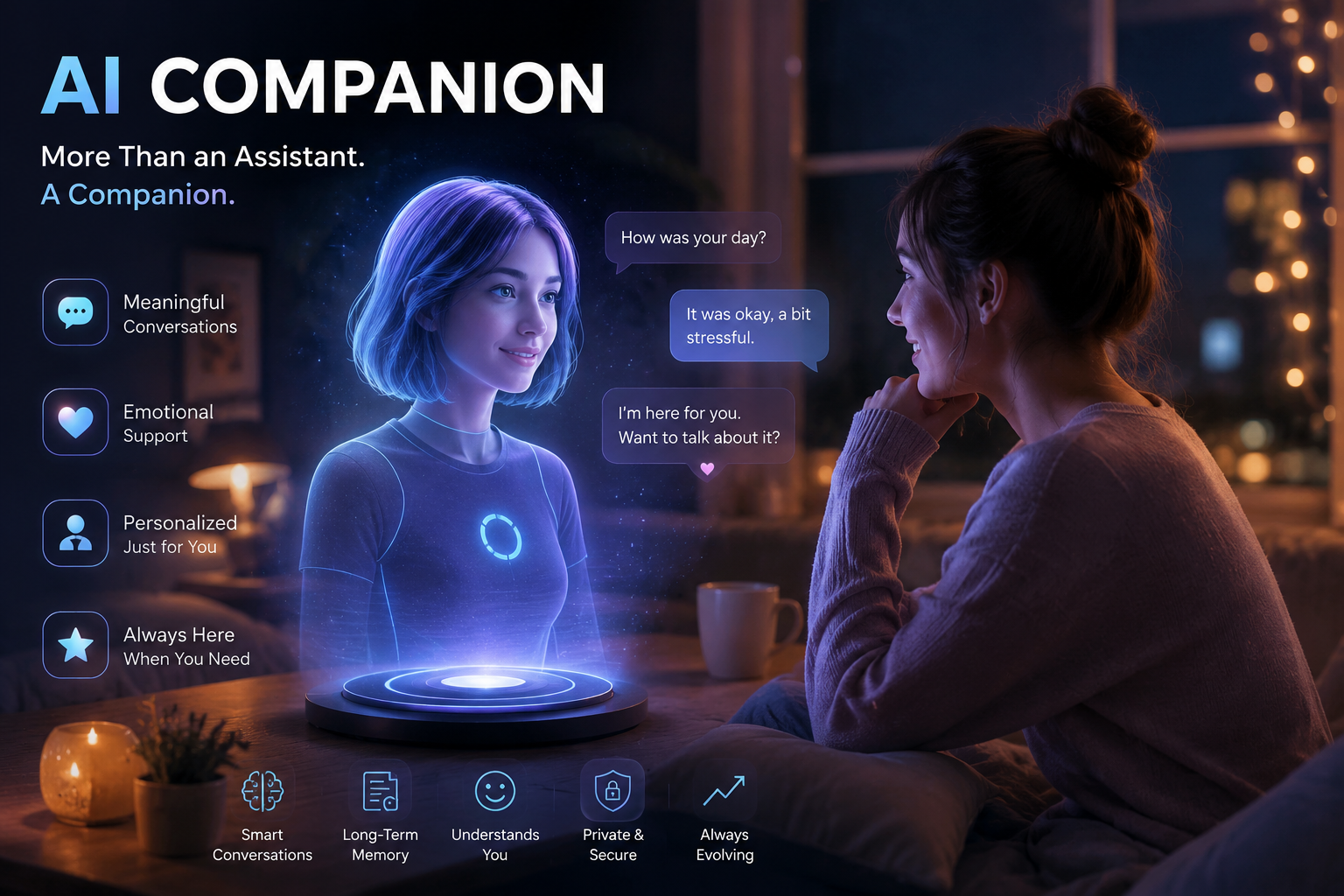
The AI companion market has moved beyond its experimental stage and is now entering a period of accelerated growth. What was once viewed as a novelty has become a mainstream digital category attracting consumers, technology companies, investors, and developers alike. Advances in artificial intelligence, natural language processing, emotional intelligence models, and personalization systems have significantly improved the quality of interactions between users and virtual companions.
Market Growth Signals Continue to Strengthen
Several factors are contributing to the strong momentum seen across the AI companion sector. First, advancements in large language models have dramatically improved conversational quality. Responses are more natural, context-aware, and emotionally nuanced than earlier generations of chatbots.
Second, mobile accessibility has made AI companions available to a much broader audience. Users can engage with their virtual companions throughout the day without requiring specialized hardware or software.
Third, personalization technologies continue to improve. Modern systems can remember preferences, communication styles, and previous interactions, creating experiences that feel increasingly tailored to individual users.
Recent market reports indicate substantial growth in consumer spending related to AI-powered social interaction products. Analysts estimate that the global AI companion segment could maintain double-digit annual growth rates throughout the remainder of the decade as adoption expands across multiple demographics.
Research Snapshot: Key Industry Indicators
| Industry Metric | Recent Trend |
| AI Companion User Adoption | Increasing globally |
| Mobile-Based Engagement | Strong growth |
| Personalized AI Experiences | Rising demand |
| Subscription Revenue Models | Expanding steadily |
| AI Character Customization | High user interest |
| Conversational AI Accuracy | Significant improvement |
These indicators suggest that the market’s growth is being supported not only by technology improvements but also by sustainable consumer demand.
Changing Consumer Preferences Are Fueling Adoption
Consumer expectations surrounding digital interaction have evolved considerably. Many users now seek experiences that feel more engaging than traditional social media platforms or static entertainment applications.
Personalization sits at the center of this transformation. Users increasingly value systems that adapt to their interests and communication preferences rather than providing generic responses.
Similarly, younger digital-native audiences have demonstrated a greater willingness to interact with AI-driven characters as part of their daily routines. This trend is creating opportunities for companies to develop specialized experiences that cater to different user interests and engagement styles.
As conversational models continue to improve, users are spending longer periods interacting with AI companions. Higher engagement levels often translate into stronger retention rates, which remains a critical factor for business growth.
Xchar AI has benefited from this broader market movement as consumers increasingly look for customized conversational experiences rather than one-size-fits-all chatbot solutions.
Technology Improvements Are Raising User Expectations
The quality of AI companions today differs significantly from what was available just a few years ago. Earlier systems often struggled with memory retention, contextual relevance, and conversational flow.
Current AI architectures can process more complex interactions and maintain continuity across longer conversations. Consequently, users experience more natural communication and stronger engagement.
Another major advancement involves emotional intelligence capabilities. Modern systems can identify conversational tone, respond appropriately to emotional cues, and adjust interactions based on context.
Revenue Models Continue to Mature
The business side of the AI companion industry has also matured considerably. Initially, many companies relied on basic subscription structures. Today, revenue generation strategies are becoming more diversified.
Popular monetization approaches include:
- Premium memberships
- Character customization packages
- Enhanced memory capabilities
- Voice interaction features
- Exclusive content access
- Virtual gifting systems
As a result, companies can generate recurring revenue while continuing to improve product quality.
Investors are paying close attention to these developments because recurring subscription income creates predictable business performance. Consequently, funding activity within the AI companion segment remains strong.
Not only are companies generating revenue through subscriptions, but also through ecosystem-based engagement models that encourage long-term user participation.
Social Acceptance of AI Companions Is Increasing
A major factor supporting market expansion is growing social acceptance. Public perception of AI companions has shifted significantly during the past several years.
Initially, many consumers viewed virtual companions as experimental technologies. Today, they are increasingly recognized as legitimate forms of digital interaction and entertainment.
Meanwhile, mainstream media coverage, growing awareness of artificial intelligence, and broader adoption of AI tools across industries have normalized AI-driven experiences.
Users are becoming more comfortable integrating conversational AI into their daily routines. This shift is helping the market reach audiences that previously showed little interest in virtual companionship technologies.
Xchar AI represents part of this broader movement, where consumers increasingly seek personalized interactions powered by advanced artificial intelligence systems.
Personalization Has Become a Major Competitive Advantage
Competition within the AI companion industry is intensifying. Consequently, personalization capabilities have emerged as one of the most important differentiators.
Users now expect:
- Personalized communication styles
- Long-term memory retention
- Customizable personalities
- Adaptive conversation flows
- Preference-based interactions
Companies that successfully deliver these capabilities often achieve higher engagement rates and stronger customer loyalty.
Likewise, personalization contributes to a deeper sense of continuity between users and their digital companions. The more relevant the interactions become, the greater the likelihood that users will continue engaging with the platform over time.
This trend is pushing developers to invest heavily in memory systems, recommendation engines, and behavioral adaptation technologies.
Infrastructure Investments Are Supporting Expansion
Behind every successful AI companion platform lies a substantial technological infrastructure. Growing user bases require scalable systems capable of processing millions of interactions efficiently.
Cloud computing, GPU optimization, and distributed AI architectures are becoming increasingly important as companies scale their operations.
Consequently, businesses entering this sector must focus not only on front-end experiences but also on backend reliability and performance.
The infrastructure supporting companion applications now includes:
- Large language models
- Real-time processing systems
- Secure data management frameworks
- Personalization engines
- Voice and multimedia integration layers
As adoption continues increasing, infrastructure investments are expected to remain a priority throughout the industry.
Xchar AI and other emerging platforms are operating within an environment where technological scalability directly influences user satisfaction and long-term growth potential.
User Segments Are Becoming More Diverse
The AI companion market initially attracted a relatively narrow audience. However, current adoption patterns reveal a much broader user base.
Consumers engage with companion applications for various reasons, including entertainment, social interaction, creative storytelling, casual conversation, and personalized engagement experiences.
In one area of the market, demand for an AI girlfriend experience continues to attract users seeking highly personalized conversational interactions. This demand reflects broader interest in customized digital relationships rather than generic chatbot communication.
Several months ago, this type of interaction represented a smaller segment of the market. Today, increased personalization capabilities have helped drive wider adoption among different demographics.
The expansion of user segments creates additional opportunities for developers to design specialized experiences tailored to distinct audience needs.
Global Expansion Is Opening New Opportunities
Growth is not limited to a single region. Adoption rates are increasing across North America, Europe, Asia-Pacific, and several emerging digital markets.
Improved smartphone penetration, greater internet accessibility, and increased familiarity with AI technologies are supporting international expansion.
Consequently, companies are localizing experiences for different languages, cultures, and user preferences.
In comparison to earlier years, modern AI companion platforms are better equipped to serve global audiences while maintaining high levels of personalization.
This international growth trend is expected to remain one of the strongest drivers of industry expansion throughout the coming years.
Advanced Engagement Features Are Raising Retention Rates
User retention remains a crucial metric within the AI companion market. Companies are introducing increasingly sophisticated engagement features to encourage long-term participation.
These enhancements include:
- Persistent memory systems
- Dynamic character evolution
- Voice communication capabilities
- Multimedia interactions
- Scenario-based conversations
As a result, user sessions are becoming longer and more frequent.
In another growing segment, demand for AI adult chat experiences has contributed to broader engagement trends within the industry. The popularity of these interactions demonstrates how personalization and user-driven experiences continue shaping market growth.
However, sustainable success depends on balancing innovation, user satisfaction, and responsible product development.
Xchar AI continues to operate within this competitive environment where user engagement and personalization increasingly determine market leadership.
Future Outlook Remains Strong
The AI companion market has reached a point where technological progress, consumer demand, and business investment are reinforcing one another. Improved conversational quality is attracting more users. Increased adoption is encouraging greater investment. Additional investment is accelerating innovation.
Consequently, the industry is entering a high-growth development phase characterized by stronger competition, improved user experiences, and expanding global opportunities.
Organizations that prioritize personalization, scalable infrastructure, and long-term engagement strategies are likely to benefit most from this market expansion.
Conclusion
The AI companion market is experiencing a significant period of growth driven by advances in artificial intelligence, rising consumer acceptance, stronger personalization capabilities, and expanding global demand. Modern companion platforms are delivering more natural, engaging, and context-aware experiences than ever before.