
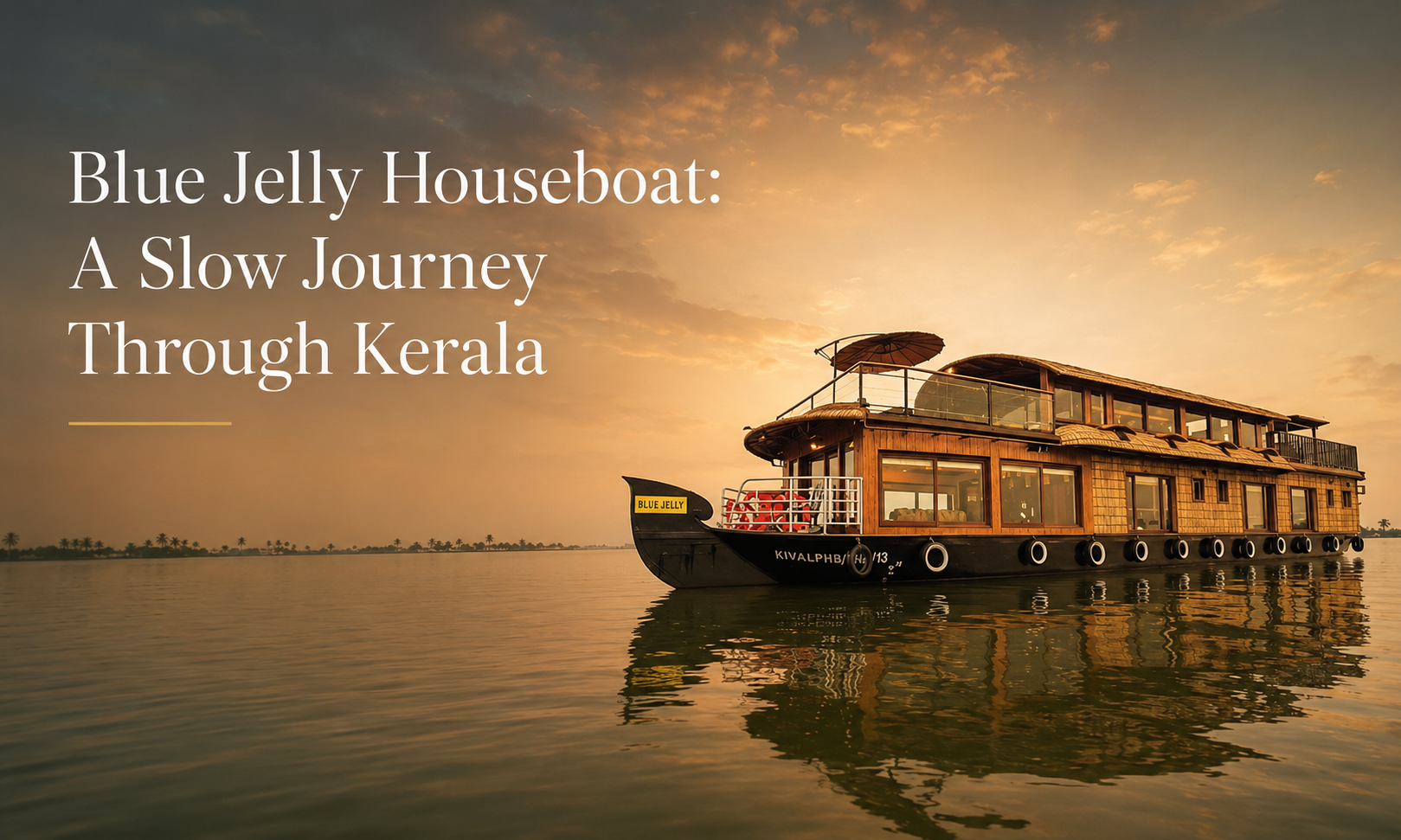
Kerala’s backwaters are not a destination to be hurried through. Their real character appears gradually—in the reflection of coconut palms on quiet canals, in fishing boats passing between villages, and in the unhurried routines of people living beside the water. A houseboat journey provides travellers with the time and space to observe these details closely.
The Blue Jelly Houseboat offers this slower way of exploring the Alleppey backwaters. Combining overnight accommodation, onboard dining and cultural sightseeing, the experience is designed around the journey rather than simply reaching a destination. Instead of following busy roads, guests travel along interconnected canals, lakes and waterways while watching rural Kerala unfold from the deck.
Understanding Kerala’s Houseboat Tradition
Houseboats have become one of the most recognisable symbols of tourism in Kerala, but their story began with transportation rather than leisure. Traditional boats known as kettuvallams were once used to carry rice, spices and other goods from the agricultural areas of Kuttanad to trading centres.
The word “kettu” refers to tied structures, while “vallam” means boat. Historically, wooden planks were joined using coir rope instead of metal nails. The vessels were then protected with natural coatings and covered using materials such as bamboo and palm leaves.
As road transportation became more common, many of these working boats were no longer needed for trade. They were gradually redesigned as floating accommodation with bedrooms, bathrooms, kitchens and viewing areas. Modern houseboats retain the visual identity of the kettuvallam while providing facilities expected by contemporary travellers.
The Blue Jelly Houseboat belongs to this newer generation of luxury-oriented backwater vessels.
First Impressions of the Blue Jelly Houseboat
The houseboat described in the Alleppey itinerary has three bedrooms, making it suitable for couples, families or small groups travelling together. Teak parquet flooring adds warmth to its interiors and creates a visual connection with Kerala’s long tradition of wooden craftsmanship.
Its layout is arranged around both comfort and scenery. A sundeck gives passengers an open vantage point from which to watch the water and surrounding countryside. There is also an air-conditioned hall designed for dining and social gatherings. According to the itinerary information, the hall can accommodate up to 24 people for lunch, although this should not be confused with the boat’s overnight sleeping capacity.
At the rear is an open lounge decorated with pieces of naturally twisted wood. This informal area allows travellers to sit outside while remaining connected to the changing landscape.
Those considering the experience can explore the Blue Jelly luxury houseboat in Alleppey to understand its accommodation style, onboard spaces and available itineraries before planning their trip.
What Makes the Journey Different?
Unlike a hotel stay, a houseboat experience is constantly changing. The view outside the window in the afternoon will not be the same as the view seen during breakfast the following morning.
The cruise passes through a landscape of canals, lakes, paddy fields, coconut groves and waterside settlements. Small boats continue to play an important role in everyday transportation, while fishing, farming and local trade remain visible along the banks.
This makes the journey more than a scenic excursion. It becomes an introduction to how geography influences daily life in the backwater region. Homes may face the canal instead of the road, people may travel by boat, and agricultural fields can appear almost level with the surrounding water.
The slow speed of the houseboat is central to the experience. It provides enough time to notice birds in the vegetation, narrow village paths, temples, churches, working boats and the movement of people between different communities.
What Happens on the One-Night Cruise?
The one-night itinerary begins in Alleppey at approximately noon. After boarding, guests receive an introduction from the crew before the cruise starts.
Around lunchtime, the houseboat reaches Kanjipadam and anchors. Stopping the vessel for lunch creates a natural pause in the journey and allows passengers to enjoy the surroundings without constant movement.
The cruise then continues towards Champakulam, one of the culturally significant settlements included in the itinerary. Guests may visit the historic St. Mary’s Church, see a traditional snake boat associated with Kerala’s Vallamkali races and explore a local village market.
The houseboat later proceeds to its overnight stopping area. After breakfast the next morning, the cruise resumes and reaches the harbour at approximately 9:30 a.m. for checkout.
This shorter itinerary is appropriate for travellers who want to experience an overnight houseboat stay without adding several days to their Kerala schedule.
What Does the Two-Night Route Add?
A two-night journey allows the experience to develop at a gentler pace. On the first day, guests board at noon and cruise towards C Block Kayal, where the houseboat anchors for lunch. The route then continues to Mancombu for a village walk before reaching the Champakulam area for the night.
The second day introduces more cultural and geographical variety. After breakfast, the cruise passes through Champakulam, with opportunities to see the church, village market and snake-boat traditions included in the shorter route.
The journey then continues through Thakazhy, associated with noted Malayalam writer Thakazhi Sivasankara Pillai. It also passes Thottapally, known for its spillway, before reaching Karumady. This village is associated with Karumadikuttan, a historic black-granite statue of the Buddha.
After another night on the houseboat, guests cruise back to the harbour following breakfast on the third morning. Travellers who want more time for village observation and cultural stops may prefer to plan an overnight Kerala backwater cruise lasting two nights rather than fitting everything into a shorter schedule.
Food and the Rhythm of the Cruise
Dining is an important part of the houseboat experience because meals are integrated into the journey. The one-night itinerary is presented with full-board service, including meals onboard.
Lunch is generally served while the houseboat is anchored. This gives the crew a stable period for service and allows guests to focus on the food and scenery. Breakfast is served before the morning cruise back to the harbour.
Exact menus, dietary options and meal inclusions can vary. Guests should confirm whether vegetarian, vegan, Jain or allergy-sensitive meals can be arranged. It is also sensible to ask whether drinks, snacks and every meal are included in the chosen package.
Who Would Enjoy This Experience?
A Blue Jelly Houseboat journey may appeal to several types of travellers:
- Couples looking for a quieter alternative to a conventional hotel
- Families interested in scenery and local culture
- Small groups wanting shared accommodation
- Photographers drawn to village landscapes and changing light
- International visitors experiencing Kerala for the first time
- Slow-travel enthusiasts who prefer observation over rushed sightseeing
However, travellers who prefer nightlife, continuous activities or highly structured entertainment may find the pace unusually quiet. The central attraction is the backwater environment itself.
Practical Things to Confirm Before Booking
Houseboat facilities and itineraries can change, so guests should verify several details directly before travelling:
- The exact vessel included in the reservation
- Number and type of bedrooms
- Private or shared cruise arrangement
- Air-conditioning hours
- Meal plan and dietary choices
- Check-in and checkout location
- Safety equipment and life jackets
- Final sightseeing route
- Seasonal changes to the itinerary
- Accessibility for older guests or people with limited mobility
- Cancellation and weather policies
The best time for many travellers to visit is between October and March, when conditions are generally cooler. Kerala’s monsoon creates especially lush scenery, but heavy rain can affect outdoor sightseeing and cruise schedules.
A Journey Defined by Observation
The lasting appeal of the Blue Jelly Houseboat does not depend only on its bedrooms, flooring or dining areas. Its real value lies in the access it provides to Kerala’s waterside landscapes.
A traveller can begin the afternoon watching open stretches of water, pass through narrow village canals later in the day and wake to a completely different scene the following morning. Churches, markets, paddy fields, boats and small settlements become parts of one continuous journey.
Blue Jelly Houseboat offers a way to experience Kerala at the pace of its backwaters—slowly, quietly and with enough time to notice what would otherwise pass unseen.
References
- Blue Jelly Luxury Houseboat
Information used: Three-bedroom layout, teak parquet flooring, sundeck, air-conditioned dining hall, rear open lounge, check-in schedule and one-night and two-night itineraries. - Cruise Through Kerala in a Houseboat
Information used: The history of kettuvallams, their original use for transporting rice and spices, traditional construction methods and conversion into tourist houseboats. - Alappuzha – A Popular Backwater Destination in Kerala
Information used: Background on Alappuzha’s canals, lagoons, backwaters and importance as a houseboat destination. - Kuttanad – The Rice Bowl of Kerala in Alappuzha
Information used: Regional context about Kuttanad’s paddy fields, waterways, rural communities and distinctive agricultural landscape.