
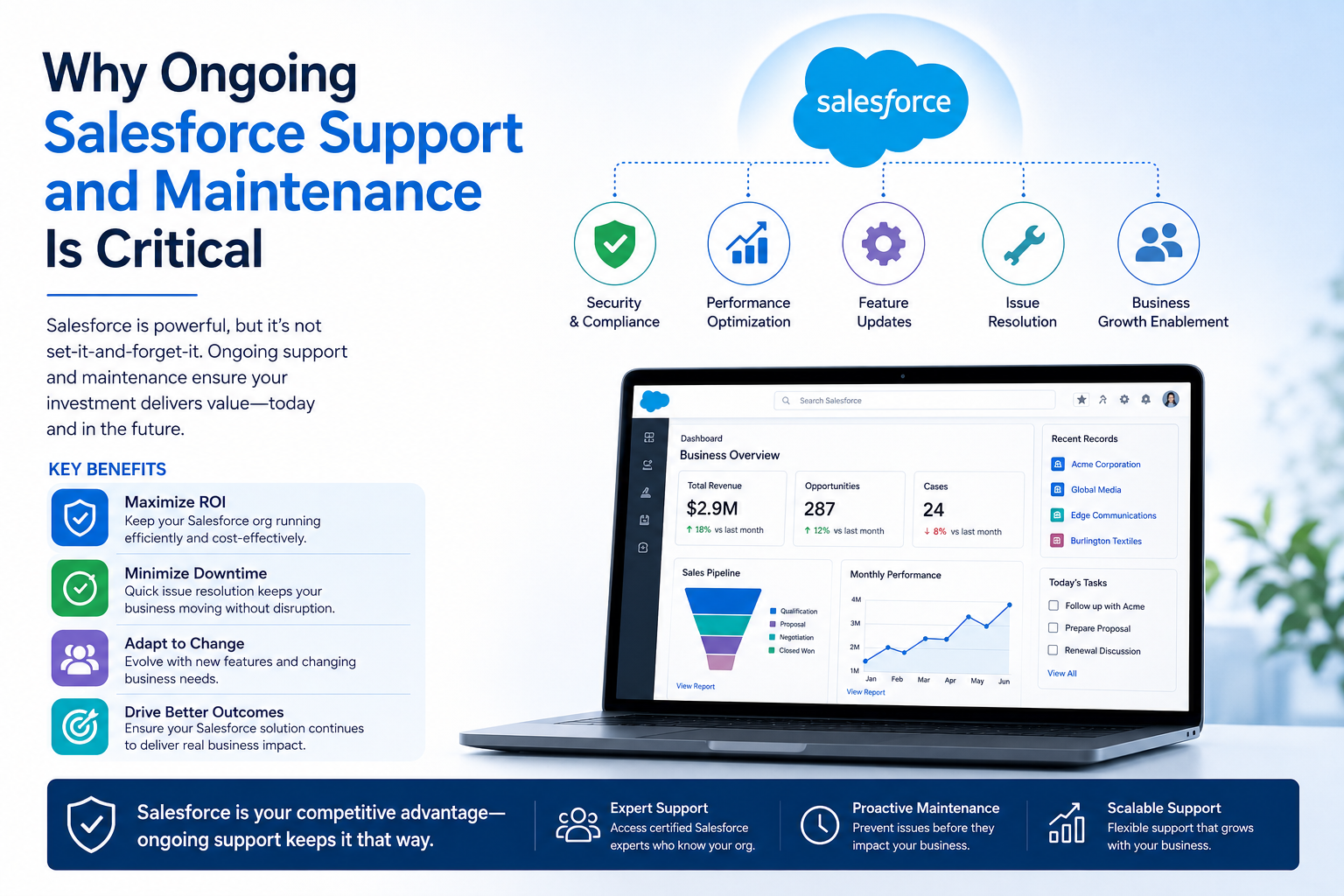
Salesforce is one of the most powerful CRM platforms in the world — but deploying it is only half the battle. The real challenge begins after go-live, when your business needs to keep the platform healthy, updated, and aligned with evolving goals. Yet, many organisations treat Salesforce as a one-time investment and neglect the ongoing care it truly demands.
That is a costly mistake.
Whether you are a growing startup or an established enterprise, ongoing Salesforce support and maintenance is not optional — it is essential. Here is why.
The Reality of Salesforce After Implementation
Once Salesforce is live, the work does not stop. The platform is dynamic. Salesforce releases three major updates every year, each bringing new features, deprecations, and security patches. Without proper oversight, these updates can break existing workflows, integrations, and customisations — sometimes without any warning.
Beyond updates, your business itself is always changing. New teams join. Processes shift. Products evolve. Your Salesforce environment needs to keep pace with all of that. Without a dedicated support structure, you risk falling behind, accumulating technical debt, and eventually running a CRM that works against you rather than for you.
This is where professional Salesforce development consulting becomes invaluable. Expert consultants help you stay ahead of platform changes, prevent system failures, and continuously optimise performance so your team gets the most out of every licence you are paying for.
Key Reasons Ongoing Support Cannot Be Ignored
1. System Performance and Reliability
Salesforce performance does not maintain itself. Over time, poorly written automation, bloated data, and outdated configurations can slow the system down significantly. Regular health checks, code reviews, and data audits keep everything running smoothly.
A sluggish or unreliable CRM directly impacts sales productivity, customer response times, and reporting accuracy. Ongoing maintenance ensures these issues are caught early — before they become expensive problems.
2. Security and Compliance
Cybersecurity threats are constantly evolving, and Salesforce environments are not immune. Misconfigurations, overly permissive profiles, and outdated sharing rules can expose sensitive customer data to unnecessary risk.
Regular security audits, permission reviews, and access control updates are critical components of any Salesforce maintenance programme. For businesses operating in regulated industries — finance, healthcare, legal — compliance requirements make this non-negotiable.
3. Adapting to Business Growth
As your organisation scales, your Salesforce setup must scale with it. New business units, additional users, expanded product lines, and changing sales processes all require platform adjustments. Without ongoing support, these changes get delayed or implemented poorly — leading to workarounds, inconsistent data, and frustrated users.
The Cost of Neglect vs. The Value of Maintenance
Many businesses hesitate to invest in ongoing Salesforce support because they view it as an added cost. In reality, the cost of neglect is far higher.
Think about the expense of:
- Emergency fixes after a Salesforce update breaks a critical workflow
- Lost sales due to a malfunctioning lead routing process
- Hours spent by your team working around system errors
- Data migration costs from years of poor data hygiene
When you work with a reliable provider of salesforce development services, you gain access to proactive monitoring, faster issue resolution, and strategic guidance — all of which protect your original investment and drive continuous ROI.
A good support partner does not just fix what breaks. They identify what could break before it does. They suggest improvements. They train your users. They help you get measurably more from the platform every quarter.
What a Strong Salesforce Maintenance Plan Looks Like
A well-structured Salesforce maintenance engagement typically covers several areas:
Technical Support — Handling bugs, errors, and user-reported issues with fast turnaround times and clear SLAs.
Platform Updates Management — Reviewing each Salesforce release in a sandbox environment before it reaches production, ensuring your customisations remain intact.
Data Management — Deduplication, archiving, validation rule reviews, and data quality monitoring to keep your CRM clean and trustworthy.
Automation Optimisation — Reviewing and refactoring flows, process builders, and triggers to improve efficiency and eliminate conflicts.
User Training and Adoption — Ongoing enablement sessions to ensure your team is using Salesforce correctly and confidently.
Reporting and Dashboard Maintenance — Keeping your analytics aligned with current business needs so decision-makers always have accurate insights.
If you are also looking to understand the financial side of running Salesforce at scale, this offshore Salesforce Commerce Cloud cost guide is an excellent resource that breaks down real costs and helps you plan smarter.
Why Choosing the Right Partner Matters
Not all Salesforce support is created equal. A generic IT helpdesk will not understand the nuances of Salesforce architecture. You need specialists who live and breathe the platform.
Partnering with an experienced salesforce development company gives you access to certified architects, developers, and administrators who understand how to manage complex Salesforce environments at scale. The right partner brings not just technical skill, but strategic thinking — helping you align Salesforce with your long-term business objectives, not just your immediate problems.
When evaluating support partners, look for:
- Certified Salesforce professionals with multi-cloud experience
- Transparent SLAs and response time commitments
- Proactive, not just reactive, support models
- A track record of long-term client relationships
- Flexibility to scale support up or down as your needs change
Continuous Improvement, Not Just Maintenance
The most successful Salesforce organisations treat their CRM as a living system — one that is constantly being refined and improved. Support and maintenance should not be about keeping the lights on. It should be about continuous enhancement.
Regular sprint reviews, feature adoption tracking, and quarterly business reviews with your support partner ensure that Salesforce keeps delivering value as your business grows and the market shifts around you.
Final Thoughts
Salesforce is a long-term investment, and like any serious investment, it requires ongoing attention to deliver lasting returns. Ignoring support and maintenance does not save money — it defers costs and magnifies risk.
With the right support model in place, your Salesforce environment becomes more than a CRM. It becomes a competitive advantage — one that your team trusts, your customers benefit from, and your business grows with.
Do not wait for something to break before you act. Build a proactive maintenance strategy today, and protect everything you have already built.